EnviroStrat works with Governments globally and are active in New Zealand, Thailand, Vietnam, the United Kingdom, the Pacific region including Tahiti and Fiji. Also working with PEMSEA with partner countries Indonesia, Lao, Cambodia, China, Phillipines, Korea DPR, RO Korea, Japan, Singapore, Timor Leste and Vietnam.
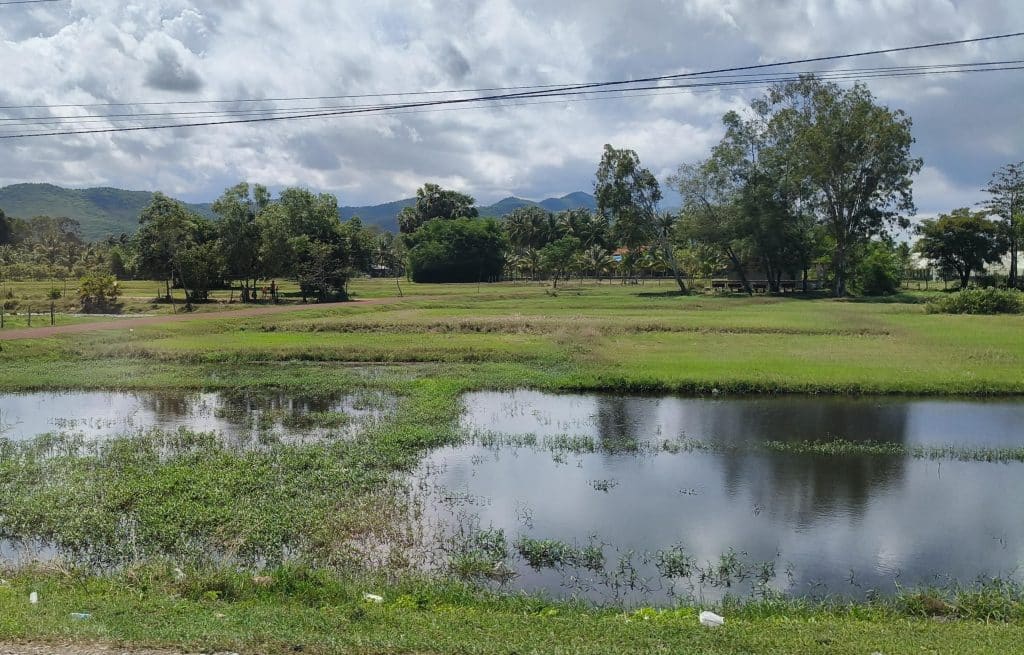
Aquaculture expansion across ASEAN is full of opportunity, but “where to grow” is the make-or-break question for sustainability, livelihoods, and investment confidence. The World Bank has commissioned EnviroStrat to undertake a study that will support the Kingdom of Cambodia and the Department of Aquaculture Development (DAD) within the Ministry of Agriculture, Forestry and Fisheries with planning decisions regarding suitable locations for the sustainable expansion of freshwater aquaculture. The project will produce a set of clear maps showing where freshwater aquaculture is most likely to work well — and where it isn’t using GIS and Multi Criteria Analysis. These maps…
When we talk about ocean health, we’re talking about community livelihoods and their reliance marine ecosystems that can meet their needs into the future. In the Philippines, this connection is profound. As an archipelago country, Philippines is one of the most megadiverse places on Earth, home to an estimated 70-80% of global plant and animal species. With more than 2.5 million registered fisherfolk, the archipelago nation depends on the sea for daily income, food security and cultural identity. But marine space is not empty space, it is shared space. Fishing, aquaculture, tourism, shipping, offshore wind, conservation and tourism areas provide…
As the final hours close on COP30 in Belem, Brazil, tensions and temperatures (literally) have been rising. The second week of discussions in ‘the gateway to the Amazon’ saw parties stuck in a deadlock over fossil fuels, a fire spread across the blue zone, an Indigenous blockade, and arguments over the future of deforestation. This COP has been filled with symbolism. The conference ended in the early hours of Saturday morning with a contentious final deal that, for many, fell short of expectations. Participants have expressed frustration at COP President André Corrêa do Lago and how the meetings have been…
Parliament has passed the Hauraki Gulf / Tīkapa Moana Marine Protection Act — a once-in-a-generation milestone for the Gulf. The new law establishes 19 protected areas: 12 High Protection Areas, 5 Seafloor Protection Areas, and extensions to two marine reserves. Together, these protections lift the safeguarded area of the Gulf from around 6% to 18%. It is a significant shift. By creating areas where damaging activities are curtailed, ecosystems are given the breathing space they need to recover. For the communities who live around the Gulf and the countless people who visit, fish, sail, and swim here, this change signals…
Like most regions, ASEAN countries face more extreme weather patterns, so riverbased systems must cope to ensure people are safe and thriving, alongside productive landscapes.
A third of New Zealand’s land is in conservation estate - ‘priceless’ places vital for biodiversity, spiritual and cultural value, carbon storage, erosion control, nutrient cycling, and hazard mitigation. They also feed our spirits and draw overseas visitors to enjoy our wild landscapes. In November 2024, the Government released two discussion documents proposing major changes to conservation law. If we want to truly value and protect our estate, we need to consider who pays and how we make up for the shortfall in financing our conservation estate. Minister of Conservation Hon Tama Potaka’s Exploring charging for access to some public…
About the client Established in 2014, the Sustainable Seas National Science Challenge is a 10-year, two phase government-funded research programme set up to address how we can best develop our marine economy, while protecting the taonga of our marine environment. Executive Summary EnviroStrat has been a significant contributor to the Sustainable Seas National Science Challenge blue economy workstream. In 2018/2019 we led a research project to identify marine activities that have the potential to create economic value whilst contributing positively to social, cultural and ecological wellbeing in New Zealand. This included a stocktake of national and international blue economy developments,…
As part of the National Government freshwater reforms, EnviroStrat ran a team of economists, scientists and social scientists with an overall budget of several million dollars developing a series of integrated economic models to assess the implications of different policy scenarios across a range of uses of fresh water. EnviroStrat’s role was highly complex and involved managing >35 contracts in excess of $2.5M. The programme was run in a series of joint ventures between local councils, sector groups and central government agencies (MPI, MFE, DOC), and linking science, policy, and economics with government decision making. The ability to synthesise multiple…
EnviroStrat was commissioned by the Ministry for the Environment (MfE) to evaluate the effectiveness and outcomes achieved from each of seven projects funded through the Fresh Start for Fresh Water Clean-up Fund. EnviroStrat reviewed the projects in detail and produced a number of recommendations so that future funding is more effectively used to achieve the objectives of each project and the overall programme.
EnviroStrat was appointed by DOC to review the current status of the Campbell Island Marine Reserve under the Sub Antarctic Islands Marine Reserve Act 2014. EnviroStrat provided a recommendation to the Minister of Conservation that it should be extended beyond its current boundaries to incorporate the entire Campbell Island Territorial Sea.