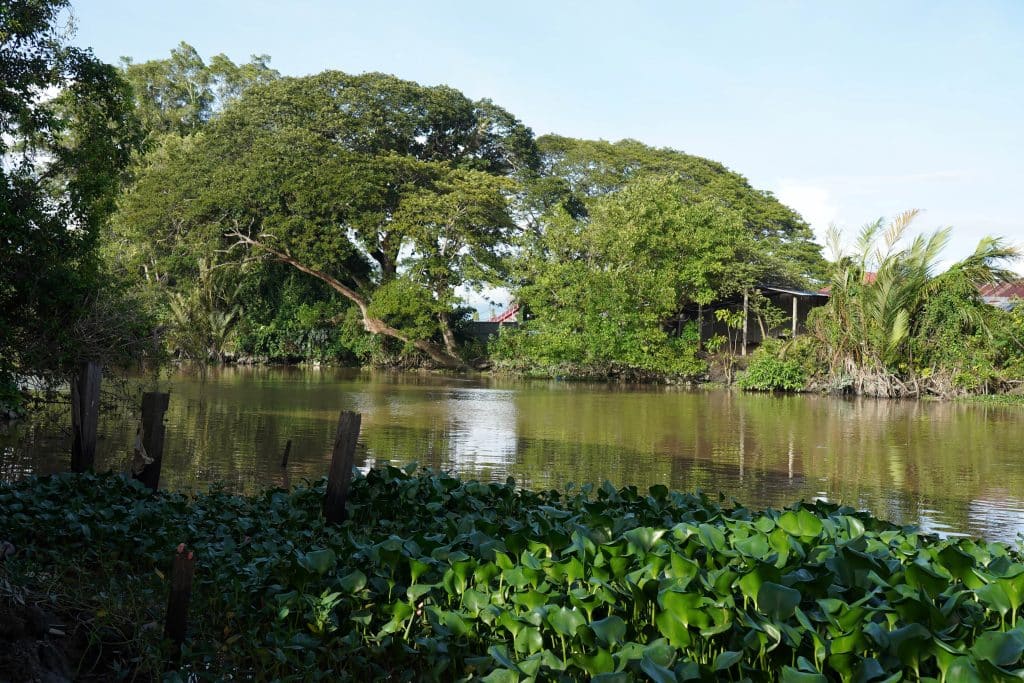
Much of our work is related to land and water management, including catchment and river basin management, marine spatial planning, the management of natural resources, as well as exploring the potential for offshore renewable energy solutions.
The way in which New Zealand manages land and water (ICM) holds value that stretches far beyond our borders. Integrated River Basin Management (IRBM), as it’s known in Southeast Asia, is the focus of a major project for EnviroStrat, members of which recently visited seven Southeast Asian nations on a field mission as part of our work for the Partnerships in Environmental Management for the Seas of East Asia (PEMSEA). PEMSEA has 11 Country Partners (CP) and 21 Non-Country Partners. Supported by the Global Environment Facility, the Integrated River Basin Management (IRBM) Project is working to set-up functional management mechanisms…
Like most regions, ASEAN countries face more extreme weather patterns, so riverbased systems must cope to ensure people are safe and thriving, alongside productive landscapes.
The New Zealand Government is expected to release a set of high-level principles for a voluntary biodiversity credit market during National Fieldays. Associate Environment Minister Hon Andrew Hoggard told Parliament last month that this work would be tested via pilot projects, and he discussed the potential for farmers’ creating benefits for biodiversity and for their businesses. “I see as a particularly beneficial project that will help out our farmers quite considerably and other landowners who have native bush on their farms or land and, basically, give them a carrot, as opposed to the stick approach, of "Here is an incentive…
At Moana Auckland Sustainability Expo in New Zealand, EnviroStrat Sustainability Director Cerasela Stancu presented on the opportunity for new finance tools to capture value from conservation and restoration work. EnviroStrat has created impact ventures focused on the blue economy, including growing native New Zealand seaweed to create a sustainable supply chain, restoring areas of reef ecosystem and exploring how scallops can be grown in an aquaculture setting. In 2022, activities that use ocean resources contributed more than $10 billion to the New Zealand economy (3.9% of GDP). However, if the sector moved to more sustainable practices, that figure could increase to…
A third of New Zealand’s land is in conservation estate - ‘priceless’ places vital for biodiversity, spiritual and cultural value, carbon storage, erosion control, nutrient cycling, and hazard mitigation. They also feed our spirits and draw overseas visitors to enjoy our wild landscapes. In November 2024, the Government released two discussion documents proposing major changes to conservation law. If we want to truly value and protect our estate, we need to consider who pays and how we make up for the shortfall in financing our conservation estate. Minister of Conservation Hon Tama Potaka’s Exploring charging for access to some public…
EnviroStrat CEO, Dr Nigel Bradly was interviewed for this newsroom article examining why New Zealand isn’t leading the world when it comes to funding innovation around agricultural emissions reduction technologies. "The New Zealand investment community is highly conservative by comparison with investors overseas," Bradly says. "There's no shortage of investment capital looking for climate innovation, but New Zealand investors don't walk the talk in the same way they do elsewhere. This is especially the case for non tech climate investment - nature-based solutions for example are woefully underinvested. There is not the same willingness to take risks. Here we are…
Dr Nigel Bradly, EnviroStrat CEO, was interviewed for Radio NZ about New Zealand’s new Seaweed Sector Framework. “The growth potential is huge … Enabling the growth is part of it. Part of it is developing the know-how and skills in farming as well as the processing to create a scalable, high value, end-to-end supply chain. The more we’re able to scale up the production of sustainably grown seaweed, the more confidence we will have to invest heavily into high value opportunities. Listen to the radio interview here. Growth framework developed for New Zealand's seaweed industry | October 2022
EnviroStrat was commissioned by Rotorua Economic Development to lead market research to better understand the opportunities and challenges for establishing a local food economy in Rotorua.
Led a feasibility study for an environmental and outdoor education centre designed for providing youth a long-stay, off grid (4-6 weeks) experience on Great Barrier Island. The long term operating model identified a financially feasible approach that aligned with all stakeholders and presented an attractive option for schools and other groups.
EnviroStrat was engaged by Te Runanga o Ng?i Tahu to prepare a restoration strategy for Te Waihora and surrounding catchment, as current approaches that rely on government grants are not having the required impact on the highly impacted estuarine lake and catchment. EnviroStrat identified innovative approaches to monetising and scaling restoration through payment for ecosystem services including carbon forestry, trialling blue carbon within the lake, use of freshwater / brackish macroalgae for nutrient removal, wetland creation for both water quality and biodiversity impact, as well as environmental impact investment.