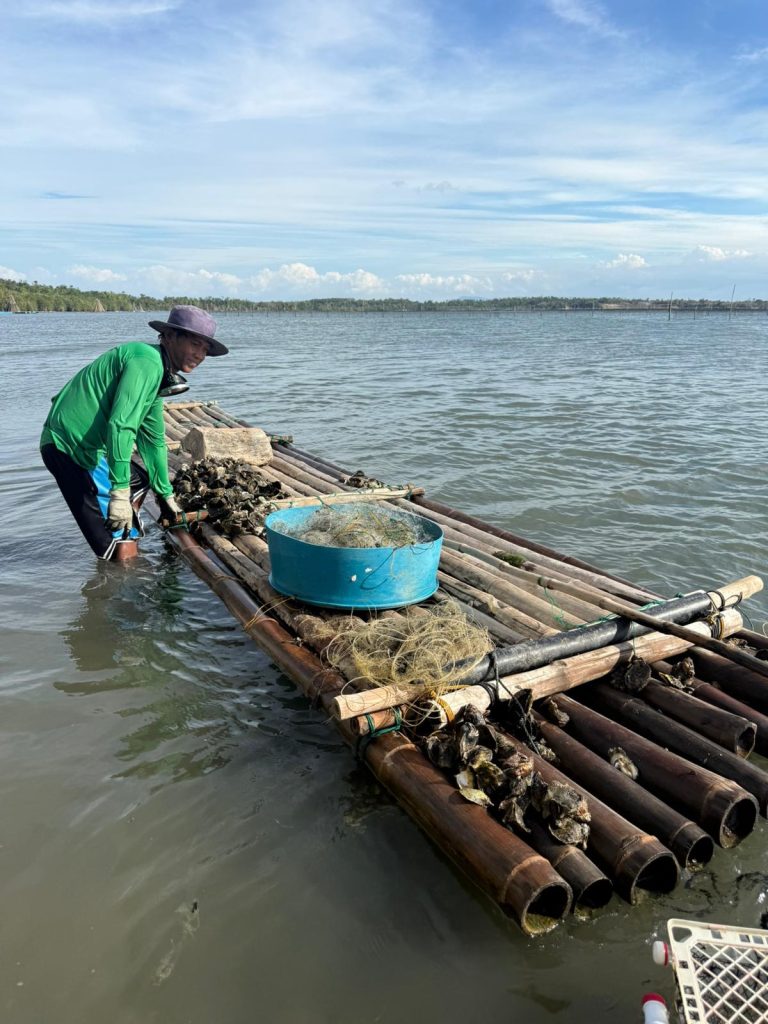
EnviroStrat is the lead consultant on a National Marine Spatial Planning (MSP) Framework and two pilot MSPs at local Government level in The Philippines, integrating the archipelago’s fisheries with a broader blue economy assessment with fisherfolk at its heart. Some 2.15 million people are employed in the ocean economy, where fisheries and aquaculture contributed US$2.37 billion (1.5% of GDP) in 2016, and employed a large majority of small-scale fisherfolk that sustain households on the coast. For the past decade, marine fishery catches averaged 2 million tonnes per year (topped by exports of tuna followed by seaweeds and crabs). But fishing,…
A powerful call to action in restoration rather than extraction was shared with more than 100 community and political leaders at the Te Kori a te Kō Nature Symposium in Akaroa on New Zealand’s South Island. Opening the event held by Onuku Runanga at Akaroa marae, Runanga Chair Rik Tainui shared the 200-year vision guiding action to restore the mauri of Akaroa harbour and create pathways for ecological repair and local jobs – including through regenerative seaweed farming. Home to generations of whanau and of immense significance to Ngai Tahu, Onuku was the site where the Treaty of Waitangi was…
From our EnviroStrat Explainer series, we talk about Blue Carbon. Q – What is blue carbon? A - Blue carbon is the carbon sequestered in coastal and marine ecosystems. These ecosystems commonly include mangroves, seagrass beds, and salt marshes. You may have heard about soil storing carbon, and blue carbon is the coastal and oceanic equivalent of this. Q – What work has EnviroStrat been doing in this area? A - Among our clients are The World Bank. The World Bank's first-of-its-kind blue carbon readiness framework empowers governments to tap into their full blue carbon potential to benefit people and…
Turning possibility into practice has shaped everything we do. Much of our focus has been on activating
new revenue streams and attracting investment to deal with large and often seemingly unsolvable
environmental challenges.
We are grateful for our advisory clients and the investors and collaborators in our impact ventures
returning and new – for trusting us to design and deploy approaches that value ecosystem services, co
design interventions for freshwater, ocean, and land-based ecosystems, and grounded approaches to
adaptation and resilience, risk mitigation, and regeneration.
When we talk about ocean health, we’re talking about community livelihoods and their reliance marine ecosystems that can meet their needs into the future. In the Philippines, this connection is profound. As an archipelago country, Philippines is one of the most megadiverse places on Earth, home to an estimated 70-80% of global plant and animal species. With more than 2.5 million registered fisherfolk, the archipelago nation depends on the sea for daily income, food security and cultural identity. But marine space is not empty space, it is shared space. Fishing, aquaculture, tourism, shipping, offshore wind, conservation and tourism areas provide…
For years, the scallop shell has been a symbol of Kiwi summers – its meat golden-seared on a barbecue, skewered at a bach, or piled high at Whitianga’s famous Scallop Festival. But beneath the nostalgia lies something far less celebratory: New Zealand’s wild scallop populations have collapsed, their once-abundant beds dredged, degraded and, in many cases, destroyed. Much of what we believed about scallops, from spawning behaviour to habitat preferences, is incomplete, borrowed from work overseas, or only partially tested in New Zealand conditions. “We’ve taken a species we barely understood,” says Dr Jenny Hillman - a marine scientist at University of Auckland, “dredged it…