The New Zealand Government is expected to release a set of high-level principles for a voluntary biodiversity credit market during National Fieldays. Associate Environment Minister Hon Andrew Hoggard told Parliament last month that this work would be tested via pilot projects, and he discussed the potential for farmers’ creating benefits for biodiversity and for their businesses. “I see as a particularly beneficial project that will help out our farmers quite considerably and other landowners who have native bush on their farms or land and, basically, give them a carrot, as opposed to the stick approach, of "Here is an incentive…
EnviroStrat Explainer: Nature Credit markets Q What are nature credit markets? Nature credit markets enable the trade of credits representing efforts to conserve or restore ecosystems. Buyers—such as corporations, governments, or investors—purchase credits to meet environmental goals, improve their sustainability credentials, or fulfill regulatory requirements. There are several options, including nutrient reduction, plastic reduction, water quality improvements, biodiversity, or carbon. At a high level, credits can be nature-specific or nature-related carbon. The former is linked to ecosystem services, while the latter is associated with carbon sequestration. Carbon Credits: Focus on reducing greenhouse gas emissions. Biodiversity Credits: Emphasize measurable improvements…
I would say to young people worried about the state of the ocean and climate, don’t be too doom and gloom about it. I know it’s really hard, and I know it can be really sad and scary sometimes – but when you start to meet people that are working in this space, you realise just how many people actually care.
At Moana Auckland Sustainability Expo in New Zealand, EnviroStrat Sustainability Director Cerasela Stancu presented on the opportunity for new finance tools to capture value from conservation and restoration work. EnviroStrat has created impact ventures focused on the blue economy, including growing native New Zealand seaweed to create a sustainable supply chain, restoring areas of reef ecosystem and exploring how scallops can be grown in an aquaculture setting. In 2022, activities that use ocean resources contributed more than $10 billion to the New Zealand economy (3.9% of GDP). However, if the sector moved to more sustainable practices, that figure could increase to…
A third of New Zealand’s land is in conservation estate - ‘priceless’ places vital for biodiversity, spiritual and cultural value, carbon storage, erosion control, nutrient cycling, and hazard mitigation. They also feed our spirits and draw overseas visitors to enjoy our wild landscapes. In November 2024, the Government released two discussion documents proposing major changes to conservation law. If we want to truly value and protect our estate, we need to consider who pays and how we make up for the shortfall in financing our conservation estate. Minister of Conservation Hon Tama Potaka’s Exploring charging for access to some public…
CEO Dr Nigel Bradly talks business model shifts, environmental impact, and the benefit of hindsight to New Zealand's National Business Review Journalist: Kate McVicar. About five years ago, EnviroStrat wanted to create environmental change rather than wait for it to happen, and started to develop its own startup ventures. In 2021, Envirostrat launched its first venture, Greenwave, followed by Kinanomics, Save Our Scallops, and ORA Reefs. The ventures are owned under the Regenerative Ocean Trust, which also receives philanthropic donations to help fund the projects. However, the intention is to grow the startups to a scale where they can be…
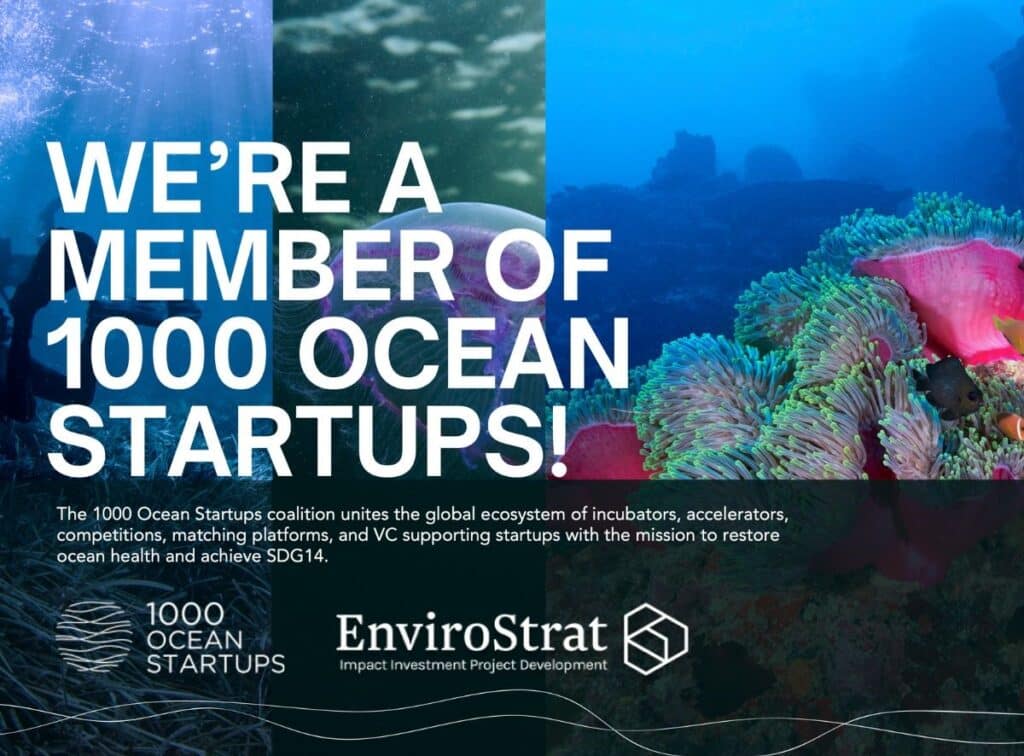
EnviroStrat is pleased to announce it is the 49th member of the global 1000 Ocean Startups coalition. The Coalition seeks to invest in and scale at least 1000 transformative startups by the end of the UN Ocean Decade - and to join, members must be active beyond the stage of ideas or concepts, with an innovative, scalable and “ocean positive” model. EnviroStrat has been directly investing in, and leading, multiple ventures in New Zealand in recent years - which began with our Greenwave Aotearoa venture and our Kinanomics venture. We've expanded to sustainable scallop aquaculture and the restoration of wild…
One of the greatest challenges in marine restoration is the lack of visibility. Unlike terrestrial ecosystems, where changes can be observed easily, much of the work being done underwater remains hidden from view. At the start of the year, EnviroStrat was gifted an underwater ROV (Remotely Operated Vehicle) to support our regenerative aquaculture and reef restoration efforts for Ocean Regeneration Aotearoa (ORA). We are currently exploring this specialised piece of equipment as a way to supplement monitoring work, helping us assess marine habitats before and after restoration interventions. The ROV provides a solution by allowing us to see, document, and…
We were privileged to be asked to contribute to New Zealand's Sustainable Business Network's Predictions for sustainable business in 2025.
The organisation asked a select group of Kiwi innovators and visionaries to share their predictions for sustainable business as members of the Next 95.
Here's what we shared alongside others in this network.