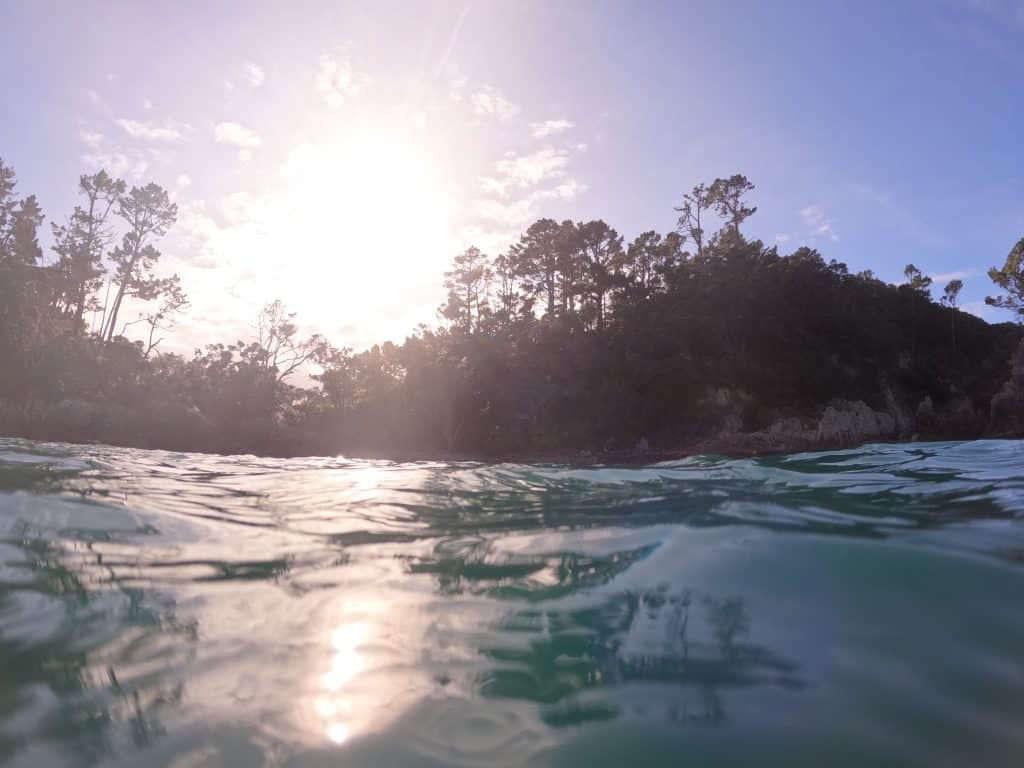
The blue economy encompasses aquatic environment activities, from traditional community development initiatives like fishing to emerging industries such as renewable ocean energies and marine biotechnology.
The blue economy reflects a growing recognition of the ocean’s critical role in economic growth, environmental protection, and social progress as well as food security and women and gender issues.
Parliament has passed the Hauraki Gulf / Tīkapa Moana Marine Protection Act — a once-in-a-generation milestone for the Gulf. The new law establishes 19 protected areas: 12 High Protection Areas, 5 Seafloor Protection Areas, and extensions to two marine reserves. Together, these protections lift the safeguarded area of the Gulf from around 6% to 18%. It is a significant shift. By creating areas where damaging activities are curtailed, ecosystems are given the breathing space they need to recover. For the communities who live around the Gulf and the countless people who visit, fish, sail, and swim here, this change signals…
We want to thank and acknowledge the work by EnviroStrat intern Ryan Whitener, 23, who joined us from a small coastal town of El Segundo in California. Ryan completed a degree in Organisational Communication at Point Loma Nazarene University (PLNU). His professors included Dr. Rob Gailey – who met EnviroStrat founder Dr Nigel Bradly and together developed the opportunity for EnviroStrat to host graduates from the University through international internships. Reflecting on his three-month with EnviroStrat in 2025, Ryan says he’s grateful for the knowledge and confidence gained from being an integral part of a small team that’s working across…
Like most regions, ASEAN countries face more extreme weather patterns, so riverbased systems must cope to ensure people are safe and thriving, alongside productive landscapes.
Ross Abercrombie, EnviroStrat.
I would say to young people worried about the state of the ocean and climate, don’t be too doom and gloom about it. I know it’s really hard, and I know it can be really sad and scary sometimes – but when you start to meet people that are working in this space, you realise just how many people actually care.
At Moana Auckland Sustainability Expo in New Zealand, EnviroStrat Sustainability Director Cerasela Stancu presented on the opportunity for new finance tools to capture value from conservation and restoration work. EnviroStrat has created impact ventures focused on the blue economy, including growing native New Zealand seaweed to create a sustainable supply chain, restoring areas of reef ecosystem and exploring how scallops can be grown in an aquaculture setting. In 2022, activities that use ocean resources contributed more than $10 billion to the New Zealand economy (3.9% of GDP). However, if the sector moved to more sustainable practices, that figure could increase to…
CEO Dr Nigel Bradly talks business model shifts, environmental impact, and the benefit of hindsight to New Zealand's National Business Review Journalist: Kate McVicar. About five years ago, EnviroStrat wanted to create environmental change rather than wait for it to happen, and started to develop its own startup ventures. In 2021, Envirostrat launched its first venture, Greenwave, followed by Kinanomics, Save Our Scallops, and ORA Reefs. The ventures are owned under the Regenerative Ocean Trust, which also receives philanthropic donations to help fund the projects. However, the intention is to grow the startups to a scale where they can be…
EnviroStrat is pleased to announce it is the 49th member of the global 1000 Ocean Startups coalition. The Coalition seeks to invest in and scale at least 1000 transformative startups by the end of the UN Ocean Decade - and to join, members must be active beyond the stage of ideas or concepts, with an innovative, scalable and “ocean positive” model. EnviroStrat has been directly investing in, and leading, multiple ventures in New Zealand in recent years - which began with our Greenwave Aotearoa venture and our Kinanomics venture. We've expanded to sustainable scallop aquaculture and the restoration of wild…
One of the greatest challenges in marine restoration is the lack of visibility. Unlike terrestrial ecosystems, where changes can be observed easily, much of the work being done underwater remains hidden from view. At the start of the year, EnviroStrat was gifted an underwater ROV (Remotely Operated Vehicle) to support our regenerative aquaculture and reef restoration efforts for Ocean Regeneration Aotearoa (ORA). We are currently exploring this specialised piece of equipment as a way to supplement monitoring work, helping us assess marine habitats before and after restoration interventions. The ROV provides a solution by allowing us to see, document, and…
We were privileged to be asked to contribute to New Zealand's Sustainable Business Network's Predictions for sustainable business in 2025.
The organisation asked a select group of Kiwi innovators and visionaries to share their predictions for sustainable business as members of the Next 95.
Here's what we shared alongside others in this network.
How do you challenge the thinking that restoring a degraded habitat can't surely be a profitable activity? EnviroStrat's Kinanomics project is a great example of the blue economy, and this article explains how an environmental problem can also be a business opportunity. Kinanomics Aotearoa is set to scale in 2025. We enjoyed our Kinanomics work being featured in the Voices of Tangaroa podcast on Radio New Zealand. Here's how we achieved our proof-of-concept: The purpose of of Kinanomics New Zealand was: To develop a new, high value seafood export industry that provides commercial, social and environmental benefit to Aotearoa New…