Impact ventures blending scientific innovation with commercial insight and philanthropic investment to drive measurable environmental gains.
As a venture studio, EnviroStrat advances the Blue Economy through projects that blend ocean regeneration with economic outcomes including seaweed farming, regenerative ocean farming, reef restoration, sustainable aquaculture and scallop restoration.
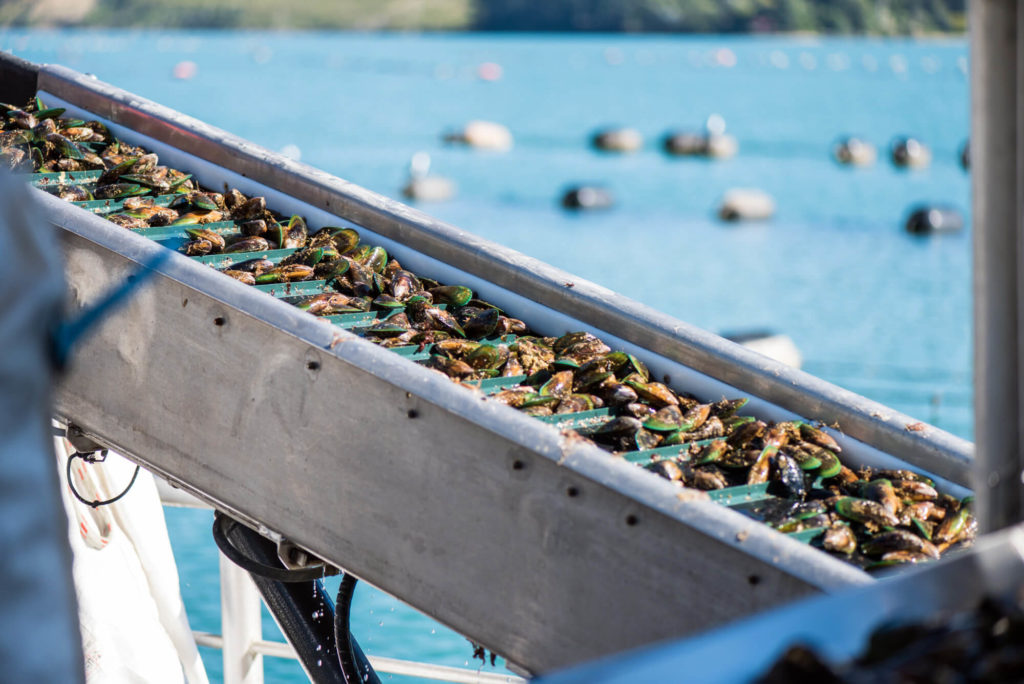
EnviroStrat prepared the Investment Case for an open ocean 1,200 ha Mussel Spat Farm off 90 Mile Beach for three far north tribes and the aquaculture sector to address a critical risk to future growth of the mussel sector. EnviroStrat worked with the three tribes, industry, stakeholders, and MPI, as well as potential investors throughout the process. The investment case involved strategic assessment, consideration of social, environmental, cultural and economic factors, detailed financial modelling, legal analysis and engineering design.
EnviroStrat led a study, funded by Foundation North, into the feasibility of impact investment to provide the pathway to a high value, low impact seafood sector in the Hauraki Gulf. This included several elements of the fishery sector; shelving fishing quota, converting the current trawling fleet to more sustainable methods, development of high value salt water fishing tourism, development of fin fish aquaculture, and the creation of a sustainable fishery brand for the Hauraki Gulf.
EnviroStrat was engaged by Te Runanga o Ng?i Tahu to prepare a restoration strategy for Te Waihora and surrounding catchment, as current approaches that rely on government grants are not having the required impact on the highly impacted estuarine lake and catchment. EnviroStrat identified innovative approaches to monetising and scaling restoration through payment for ecosystem services including carbon forestry, trialling blue carbon within the lake, use of freshwater / brackish macroalgae for nutrient removal, wetland creation for both water quality and biodiversity impact, as well as environmental impact investment.
The Waip? catchment is a significant contributor to the sediment and nutrient load of the Waikato and Waip? River catchments. Waikato River Authority and Waikato Regional Council catalysed and funded a feasibility study to investigate whether impact investing could enable accelerated land use and/or land cover change to achieve multiple environmental and social benefits, whilst delivering a positive financial return. The project built on the environmental enhancement projects that have been identified and prioritised through the Waikato River and Waip? River Restoration Strategy and the priorities identified in the Waip? Catchment Plan and Healthy Rivers Plan Change. Traditional solutions to mitigate and improve…